
Reading our times, through the lens of an ancient story … and finding hope
Remember “Think globally, act locally”? If we’re going to do what’s right for the world, and do what’s right for the moment … it helps to know what time it might be. Then we can live in the right direction and do what fits, best we can.
In one way, this story feels like the opening of Star Wars: “a long time ago in a galaxy far, far away.” Could this ancient story be “real history”? At first glance it seems so unlikely. But as you read it and ponder the images, in another way it suddenly becomes contemporary, very close. Is it our history? Is it a “parable,” a story thrown alongside us to show us something we can’t see any other way? You decide.
Please walk with me all the way today. You may want to go farther, but at least come with me as far as we go together. Today we’ll tell an ancient story, we’ll look at what it might say to us – and we’ll look at some suggestions for what we can do about it.
It’s a story with a context – that’s the crucial part that many readers forget. See if it reads better with its own backstory.
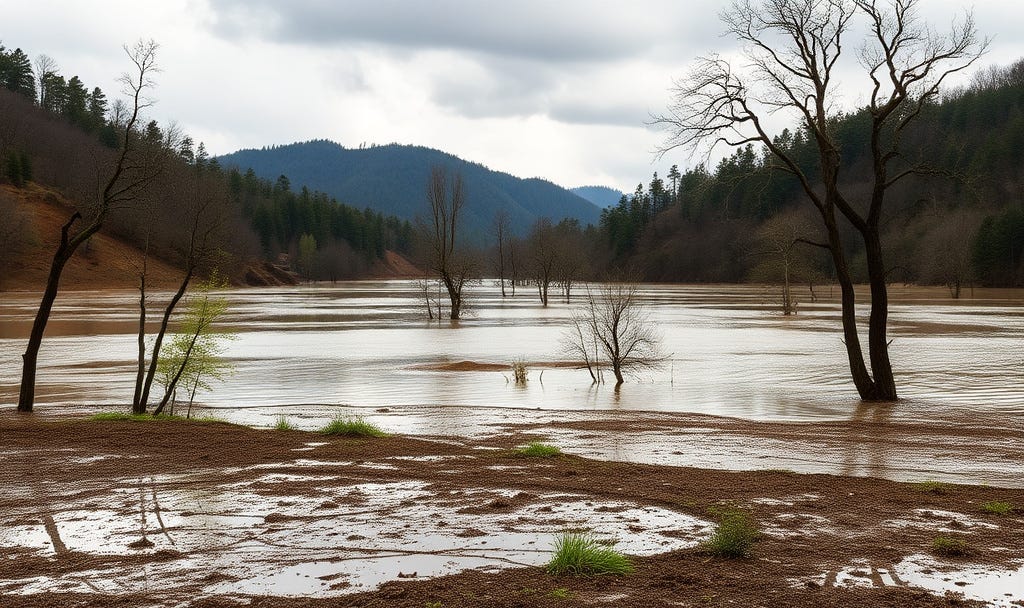
It was a world in recovery. The pre-ancient world had been traumatized by a whole series of social and natural disasters, very nearly destroyed, and had only recently begun to stabilize again. Human society began anew, rediscovering their relationship with their environment, each other, and their sense of the spiritual, the divine. People were learning all over again how to rely on each other, to trust each other, to need each other as they made their way in a new world swept clean of ancient horrors.
Life in the new world wasn’t easy, but humans in their ingenuity were adapting to their new land, new sea, new agriculture – beyond mere subsistence. Life in the new world yielded new experiences, but also old ones: though the ancient enemies were gone, the lessons they taught us of power, oppression, rage, pride and honour, wealth and consumption remained with us still, like spiritual and cultural nightmares that we couldn’t shake.
The unseen spiritual world and the earth called us to spread out, to live our lives in connection, to savour all of life – not only what we could create. But the dark promises of our ancestors came to the fore: stay close, build, don’t scatter. “Your ingenuity will save you, what you can acquire will satisfy you, the work of others will make you prosperous, and military might will keep you secure.”
For the world had become a frightening place again. Anything could happen to anyone, and often did. As before the great disasters, once again great societies built great armies, and great civilizations fought for the dominance of all life. We rebelled collectively against a life deeply connected to the earth and to the spiritual world. We tried to create our own version of heaven on earth. It was “the city.”
In this case, it was the city with “a tower that reached to the heavens,” a monument to our ingenuity and power, an awe-inspiring symbol visible from great distances, sure to buffer our fears and bolster our creativity.
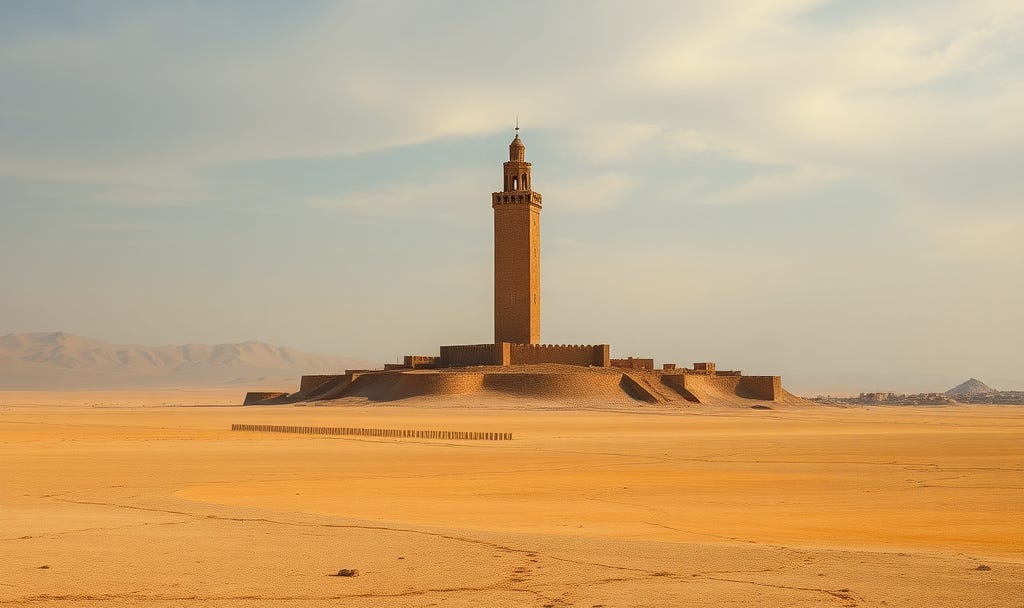
This city – and what was going on in it – was our desperate effort to avoid sliding back into the hard life of recovering from the Flood. But we didn’t realize that the seeds of that disaster had continued into our own time, that we were driving on the same path as our ancestors. Along with the amazing progress of our technology came the same ancient enmities, the same power plays, the same murder and destruction.
The world was as one. We “spoke the same language.” We had the same forms of thought, a common culture – I think rather snarkily of John Lennon’s “Imagine”: “no heaven above us, no hell below us, only earth and sky” – which theoretically would make us flourish – the best we could be, without interference from you-know-who. Except that we no longer knew “who.”
It’s an irony, of course: technological advances, social conflict and moral consternation, bound together by one language, were all driven by one very big fear: the return of the chaos, the apocalyptic near-destruction of everything. The city’s proud, fearful hope presented a sure invitation for that very return.
We don’t know how many warnings came to the world before the ancient flood. We know that warnings came. We know that God worked long and hard to reach a generation increasingly hard to reach – and finally even God gave up – how scary is that?! The “Flood story,” “Noah’s Ark” isn’t a fun childhood story of animals on a boat. It was a terrifying apocalyptic disaster, one that no one – not even God – ever wanted to see again.
And that brings us back to the city: the same processes that ruined the ancient world were at work again. “Nothing they plot to do will be impossible for them.” Sounds great! Until you see what humans do with it. How would you know that? Check out what they’ve done: the original-language story is full of puns on the word “rebel” – mighty kings, even one called a “mighty hunter,” named “we-shall-rebel.”
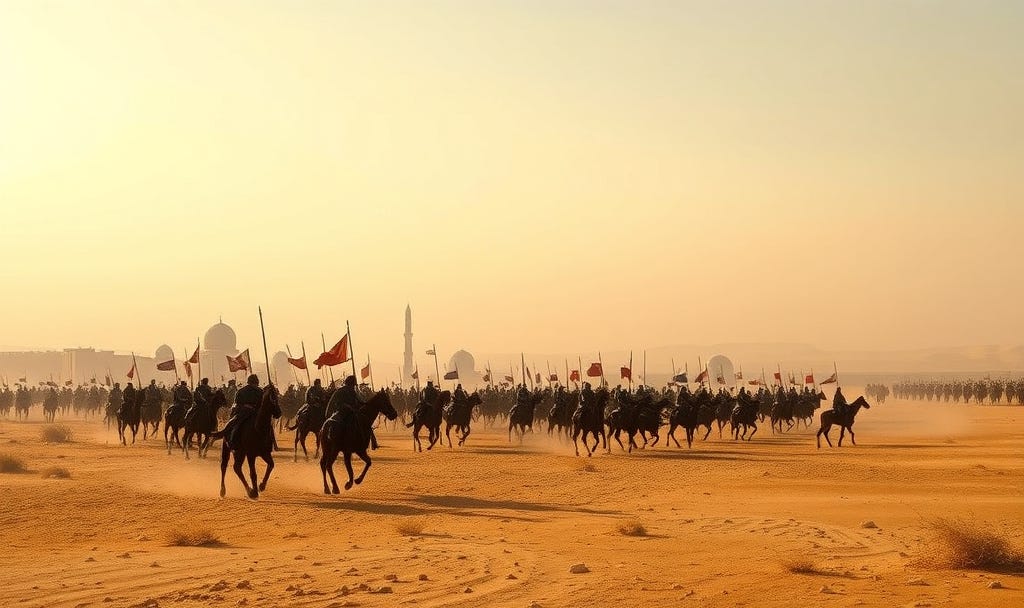
Now God had promised: “never again a Flood.” So with remarkable compassion God went down to the city to check it out, to see firsthand what was happening. “What? God knows everything, He doesn’t need to do that!” You’re right – but He showed up anyway, just so you know that He cared enough to be sure. And He intervened ahead of time, in advance, to head the situation off at the pass, before it became irredeemable. His curiously brilliant strategy centred on language, on how humans make meaning and communicate with each other.
How do people who speak the same language lose the ability to communicate with each other? Well … what’s your story? Have you ever witnessed this?
What happens to their projects and plans, their military, their economy, their societies when perople can’t communicate anymore? In this story, “they stopped working on the city and the tower and were scattered over the face of the earth.”
Technological progress was disrupted – at least, for a while. While the ancient enmities continued, they no longer had the power and means to annihilate – or enslave – each other as thoroughly as they did before. Humans were removed from their own creation and forced back into renewed contact with the earth – in the fond hope that we might become reconnected with the Spiritual. At the end of the old story a whole new hope for the world is introduced through the experience of one man and his family – but that’s for another day.
OK, the movie is over, let’s go out for some dessert: some of this is easy analogy – some of it might be more challenging: over the past 40 years or so we have met a whole new kind of world – one of our own making. We can – and do – go everywhere, any time, to do anything. If you don’t do it “actually,” you can do it “virtually.” We can talk and see and plan and do and reap results – and erase them – globally in a way unknown in our long history.
What does “freedom” mean? “Civilization”? “Order”? “Love”? Human rights? Justice? Human flourishing? “Good?” What does “human” mean? What is the value of human life, any life? And much more: words that are regularly paraded before us to secure our votes, our money, our will, our energy, our following … to what end?
Globally speaking, we are dividing – spectacularly – at an unprecedented rate in unprecedented numbers. We mostly recognize this as we look at our public media, politics, education, social media – as we live with our families, friends, workplaces, in our cities and nations. We see what we are given to see – through the lenses we are given we form our opinions and relationships – to love, hate, come near, break up.
Yes, none of this is new. Yes, I realize we’ve had trouble before and managed to stabilize again. But make no mistake, the degree to which it’s happening in our time is not normal, it is not “good,” it is not sustainable. The dividing is no longer merely social or political: it’s horizontally (and vertically) spiritual. It may well lead to a social, economic, military and environmental apocalypse of sorts. Unfortunately, given the speed of global human communication, whatever it is may be coming sooner than anyone expects.
What are we facing? Are we returning to another Flood, the catastrophic destruction of a huge portion of human endeavour and the environment? Or is there another possibility?
Let me suggest this trajectory: we’re on our way into a “scattering” – a disturbing sudden loss of cohesion that complicates our lives – yet a disruption that doesn’t destroy everything. Like the city striving to create our own world, our own heaven on earth, all being driven to speak one language, we are making a terrifying discovery: we don’t understand each other and can’t work together. Our experience “globally” trickles down into our everyday “locally.” As hard as we try to live together and work together, we don’t value the same things in the same ways, we don’t pursue the same visions, and we no longer know how to allow each other freedom: there must be winners and losers, and “you’re going to have to be a loser.”
I don’t know what form the scattering will take. If it’s previous history replayed on a larger scale, it would include international war, increasing civil disorder, economic disruption, and black-swan environmental trouble, including food insecurity and pandemics. Oh, you noticed?
End-time talk makes me cynical – it sells too many books, and yes, we’re all jaded a bit on apocalyptic narratives. The Scattering doesn’t have to be the End to be significant. Many people are already living in the Scattering as their homes are torn apart in war, famine, chaos. In the past we had some recovery. This time it may not be so easy.
If we’re coming to a Scattering, there may not be a big-picture solution to avoid the coming days. You can’t fix it. You won’t like it. But even as the ancients survived their scatterings – hey, they did, we’re here – so must we. So must our children and grandchildren.
“But why must we? Wouldn’t the world be better off without human depredation?” Tell you what – if you really believe that, and no one can convince you of the value of human life and culture, well … go ahead and have at it. See you on the other side. For the rest of us who seek meaning for our lives and our future, it’s time for serious soul-searching and change – not just “out there,” but “in here.”
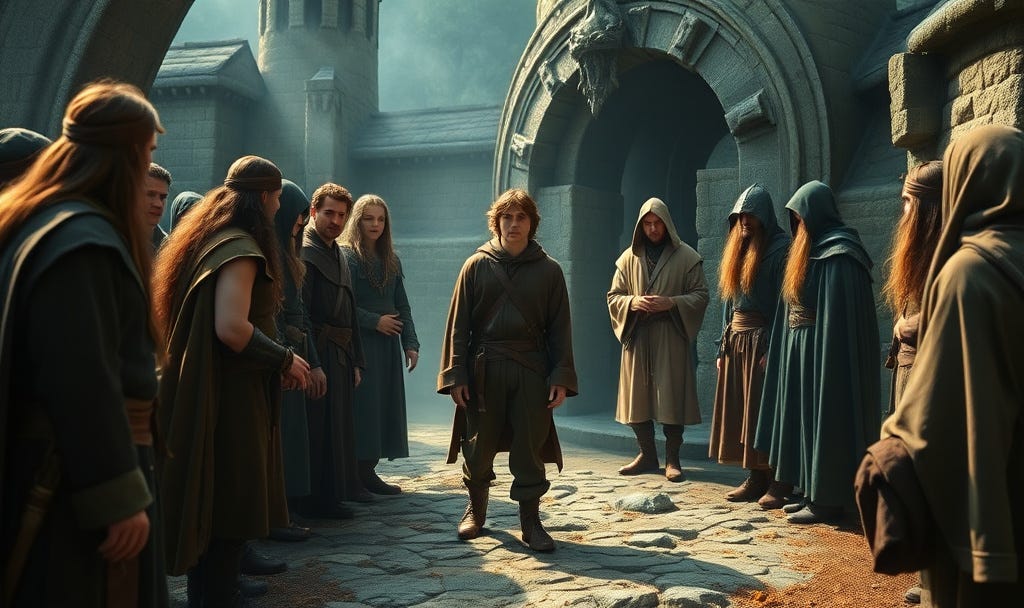
As Frodo said, What must we do? How then shall we live? Here are a few ideas:
Build community where you are. Lay aside the hope that you can make a difference globally, by joining causes, bloviating on social media (I know, right?), writing letters to the editor of your local paper, making encampments on university campuses, sending money, spending money, joining the universal rage machine. The time for all those things is long over. Instead, build smaller, deep networks of friends – with some people who are like you, with some people who are different from you – people to whom you can be committed, people who will be committed to you. Commit to work on sharing meaning, and get help to do it. Build open-hearted friendships, and welcome people into your circle. Create safe places where we can grow together. Share your space – wherever you still can, “whilever” we still can. I have some ideas about that – maybe you do, too. Tell me about yours!
Re-connect with the spiritual side of life. Do it alone, with your friends, with your new small community. If this is new territory for you, you’re in good company! If it seems strange to you, that’s understandable! If you’re curious about what that means, stay tuned – I have a few ideas about that, too. What are your thoughts?
Create things that are beautiful and good: renew life here instead of consuming and destroying it. Create music, art, build things, care for things. Turn your heart toward the flourishing of all life here, best you can, and do what is beautiful and good for other people – whether they agree with you or not. You won’t do it perfectly – just turn your heart to it and begin to do the good you see to do. You’ll see more as you go! Tell me about what you’re already doing, and what it means to you!
Teach your children and grandchildren: tell them that there is more than earth and sky, more than we did do, could do, could have done – that there is an unseen world, very close to this one, One who invites us to a new kind of life that gives life, instead of taking it – that brings us together in a new way, instead of dividing us – who shepherds it to a better place. If you don’t have children or grandchildren, get permission to teach someone else’s. Think and act beyond your generation. How does that sit with you?
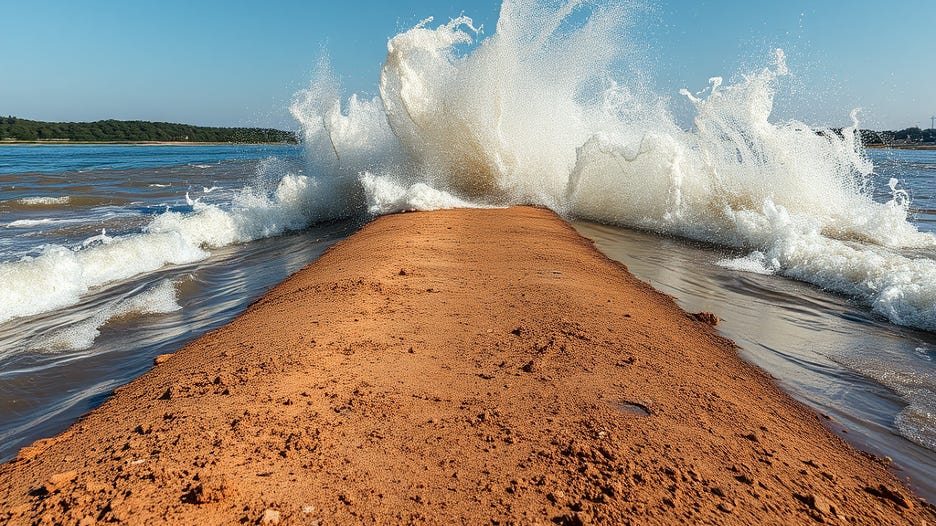
Plan to endure. You can endure. The people you love can endure. Learn all you can about enduring. Don’t be terrified of what you see happening around you. The One who made us loves us, and is guiding us to a wonderful destination. The dividing and scattering of waters builds a road, and always ends in hope.
There’s much more to say: how is it that “God is the one who confuses the languages”? I’ve got some thoughts on that, too: do you know the difference between butter and clay? But that’s for another post.
The back story for this one is in the Hebrew Bible (Christian Old Testament): Genesis 1 – 11, especially chapters 6 – 11. What do you see when you read it?!
 Kirk M. Ruch | spiritual direction & consulting - church support